Quartz glass is widely used in industries that require high-temperature resistance, chemical stability, electrical insulation and reliable optical performance. From semiconductor manufacturing and laboratory equipment to UV lighting and industrial heating, quartz glass products play an important role in many technical applications.
However, quartz glass is available in many different forms, including tubes, rods, plates, sheets, boats and custom-shaped components. Each product serves different purposes and may require specific material grades, dimensions and processing methods.
In this guide, we introduce the main types of quartz glass products, their key properties, common applications and important factors to consider when selecting a suitable product.
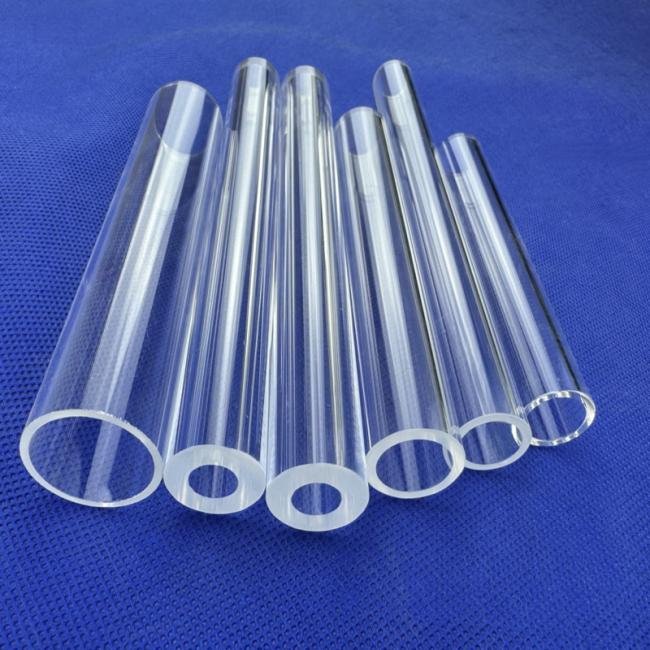
1. What Is Quartz Glass?
Quartz glass is a type of glass primarily made from high-purity silica (SiO₂). Unlike ordinary glass, it offers excellent thermal stability, low thermal expansion and good chemical resistance.
These properties make quartz glass suitable for applications involving elevated temperatures, demanding environments and specialized industrial processes.
Depending on the intended application, quartz glass products can be manufactured in different shapes, sizes and material grades.
2. Key Properties of Quartz Glass
Understanding the properties of quartz glass helps determine whether it is suitable for a particular application.
High Temperature Resistance
Quartz glass can withstand high operating temperatures, making it useful in industrial heating systems, laboratory furnaces and semiconductor processing equipment.
The actual operating temperature depends on the material grade, product design, atmosphere and working conditions.
Excellent Thermal Shock Resistance
Quartz glass has a low coefficient of thermal expansion. This helps reduce stress caused by temperature changes and provides good resistance to thermal shock under suitable operating conditions.
Chemical Resistance
Quartz glass offers good resistance to many acids and chemical environments. However, it can be attacked by hydrofluoric acid and certain alkaline substances.
Material selection should always consider the chemicals and operating conditions involved.
Optical Properties
Depending on its material grade and manufacturing process, quartz glass can provide good transmission in ultraviolet, visible and infrared wavelength ranges.
Different grades are suitable for different optical and lighting applications.
Electrical Insulation
Quartz glass has good electrical insulating properties, making it useful in electrical, electronic and high-temperature equipment.
3. Common Types of Quartz Glass Products
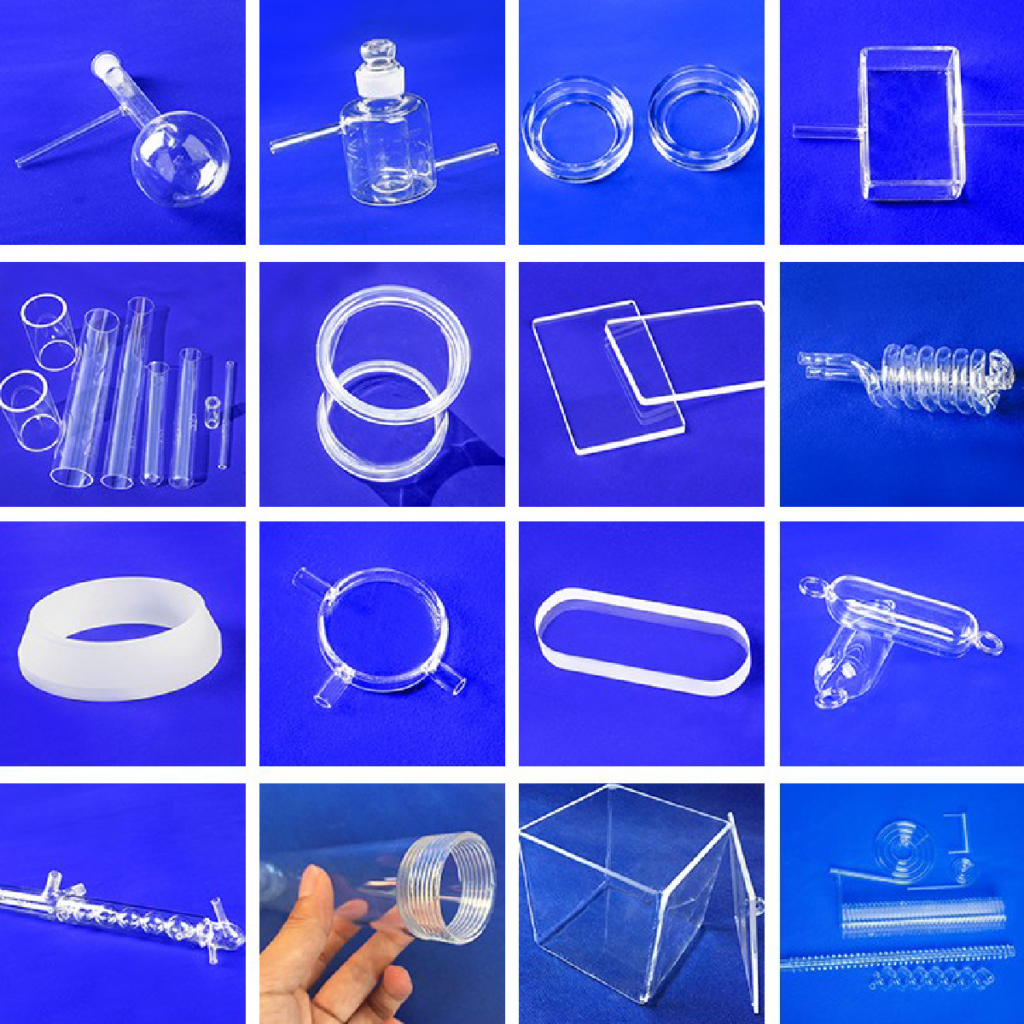
Quartz glass can be processed into various shapes to meet different industrial requirements.
Quartz Glass Tubes
Quartz glass tubes are widely used in semiconductor equipment, laboratory furnaces, industrial heating systems and UV applications.
They are available in different diameters, wall thicknesses and lengths. Customized tubes can also be manufactured according to drawings or samples.
Quartz Glass Rods
Quartz rods are used in laboratory equipment, optical applications, industrial components and specialized processing projects.
They can be supplied in different diameters and lengths, depending on the application.
Quartz Glass Plates and Sheets
Quartz plates and sheets are commonly used for viewing windows, protective covers, laboratory equipment and industrial components.
They can be cut and processed to meet specific dimensional and surface requirements.
Quartz Boats
Quartz boats are used to hold and support materials during high-temperature processing, particularly in semiconductor and photovoltaic manufacturing.
Their dimensions, structure and material grade should be selected according to the equipment and process requirements.
UV Quartz Tubes
UV quartz tubes are designed for applications involving ultraviolet light transmission, including UV lamps, water treatment equipment and specialized lighting systems.
Different UV applications may require different material grades and transmission characteristics.
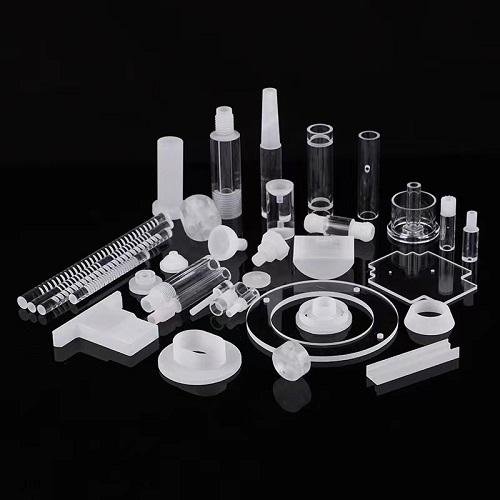
Custom Quartz Components
In addition to standard products, quartz glass can be processed into components with special shapes and structures.
These may include drilled parts, slotted components, multi-bore tubes, welded structures and other products manufactured according to technical drawings or samples.
4. Applications of Quartz Glass Products
Quartz glass is used across a wide range of industries because of its combination of thermal, chemical, electrical and optical properties.
Semiconductor Manufacturing
Quartz components are used in various semiconductor manufacturing processes, including high-temperature processing and wafer handling.
Typical products include quartz boats, tubes, plates and customized furnace components.
Laboratory and Scientific Research
Quartz glass is widely used in laboratory equipment, experimental systems and scientific instruments.
Its thermal stability and chemical resistance make it suitable for many demanding laboratory environments.
UV Lighting and Water Treatment
UV-transmitting quartz tubes are important components in ultraviolet lamps and water treatment systems.
Their optical properties allow ultraviolet radiation to pass through the material for specific applications.
Industrial Heating
Quartz tubes and other quartz components are used in heating equipment, furnace systems and high-temperature industrial processes.
Solar and Photovoltaic Industry
Quartz products are used in selected photovoltaic manufacturing processes, including equipment that requires high-temperature-resistant components.
Laser and Optical Equipment
Specialized quartz glass components are used in certain laser systems and optical equipment, where material properties, dimensions and surface quality are important.
5. How to Choose the Right Quartz Glass Product
Selecting the correct quartz glass product requires more than choosing a shape or size. Several factors should be considered before placing an order.
Material Grade and Purity
Different applications require different material grades and purity levels.
For example, semiconductor applications may require tighter control of metallic impurities and other material characteristics than general industrial applications.
Dimensions and Tolerances
Important dimensions may include outer diameter, inner diameter, wall thickness, length, flatness and dimensional tolerances.
Providing technical drawings or detailed specifications helps ensure accurate manufacturing.
Operating Conditions
Consider the operating temperature, atmosphere, chemical exposure and working environment.
These conditions can affect the selection of material and product structure.
Surface Finish and Processing
Depending on the application, quartz products may require cutting, grinding, polishing, drilling, slotting, welding or flame processing.
The required finish should be clearly specified before production.
Customization Requirements
For non-standard components, technical drawings, samples or detailed measurements can help determine the manufacturing process and final specifications.
6. Standard Quartz Products vs. Custom Quartz Components
Standard quartz products are suitable for applications with common dimensions and conventional structures. They can simplify product selection and reduce the need for specialized processing.
Custom quartz components are more suitable when equipment designs or production processes require specific dimensions, structures or surface finishes.
A reliable manufacturing process should consider the material, dimensions, processing requirements and final application together.
7. Quartz Glass Manufacturing and Processing
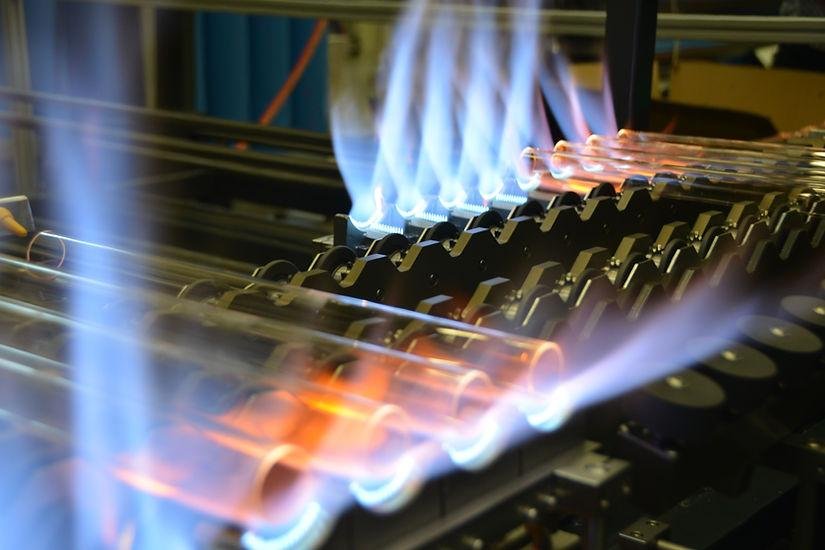
Quartz glass manufacturing involves specialized processes to shape the material into products with the required dimensions and structures.
Depending on the product, common processing methods include:
- Cutting and sizing
- Grinding and surface finishing
- Flame processing and polishing
- CNC cutting and machining
- Drilling and slotting
- Quartz welding and forming
The appropriate process depends on the product design, material characteristics and application requirements.
8. Working with a Quartz Glass Manufacturer
When sourcing quartz glass products, buyers should evaluate more than the initial product price.
Important considerations include:
- Material grade and product specifications
- Manufacturing and processing capabilities
- Dimensional consistency
- Quality inspection procedures
- Production lead time
- Communication and technical support
For customized products, it is helpful to provide drawings, samples or detailed specifications so the manufacturer can evaluate the requirements before production.
At Jingzita Quartz, we supply a range of quartz glass products, including quartz tubes, rods, plates, sheets, boats, UV quartz tubes and customized quartz components.
Our processing capabilities include cutting, grinding, polishing, CNC machining, drilling, slotting, welding and forming.
We work with customers on standard quartz products as well as customized components for different industrial applications.
Conclusion
Quartz glass is a versatile material used in many industries that require reliable performance under demanding conditions.
From quartz tubes and rods to plates, boats and customized components, selecting the right product depends on the material grade, dimensions, operating environment and processing requirements.
Understanding these factors can help buyers make better sourcing decisions and find quartz glass products that meet their application needs.
Looking for quartz glass products or customized quartz components?
Contact Jingzita Quartz to discuss your drawings, specifications or product requirements.